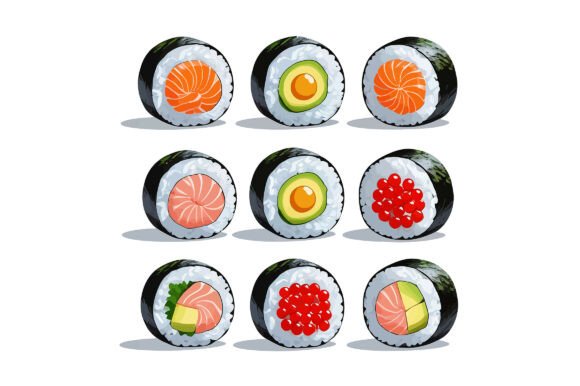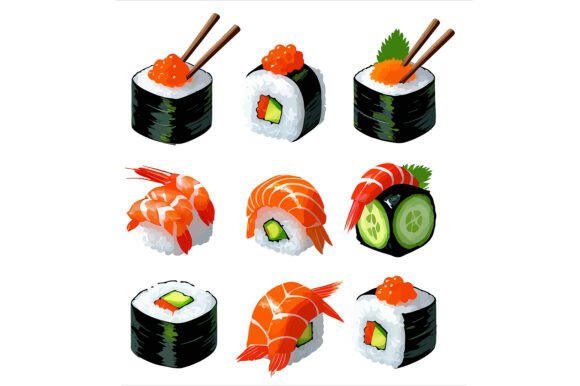
Vector Art of Assorted Sushi Rolls: A Practical Guide for Designers and Creators
In the realm of digital design, the choice of asset format often dictates the longevity and versatility of a project. When creating content that features food, particularly Japanese cuisine, the Vector Art of Assorted Sushi Rolls offers a distinct advantage over standard raster images. This specific illustration package provides a scalable, editable foundation for a wide range of creative endeavors, from print-on-demand merchandise to educational materials. Understanding the technical nuances of this resource helps designers determine if it aligns with their workflow or if alternative formats might serve better.
Understanding the Distinctive Nature of Vector Sushi Illustrations
The primary distinction of Vector Art of Assorted Sushi Rolls lies in its mathematical construction. Unlike pixel-based images such as JPEGs or PNGs, which rely on a fixed grid of colored dots, vector graphics use paths defined by points, lines, and curves. This fundamental difference means that an image of a sushi roll created in vector format can be resized from a small business card logo to a massive billboard without any loss of clarity or sharpness. The edges remain crisp, and the colors stay vibrant regardless of the scale.
This specific collection typically includes a high-quality EPS file, which is the industry standard for professional vector editing. The inclusion of this format ensures that every element—the texture of the rice, the sheen of the fish, and the placement of the nori—is fully editable. Designers are not limited to simply placing the image; they can deconstruct it, change color palettes to match brand guidelines, or isolate specific rolls to create new compositions. Furthermore, the package usually includes a high-resolution JPEG, offering a ready-to-use option for quick drafts or clients who do not require full editability.
Comparing Vector Formats Against Raster Alternatives
When evaluating resources for culinary-themed designs, creators often weigh vector art against high-resolution photography or raster illustrations. Each approach has its place, but the tradeoffs become clear when considering long-term utility. High-resolution photographs offer realism and texture that vectors sometimes struggle to mimic perfectly. However, photos are rigid; changing the background color or resizing them beyond their original dimensions leads to blurriness or compression artifacts.
In contrast, the Vector Art of Assorted Sushi Rolls prioritizes flexibility. While a photograph captures a specific moment in time with lighting and shadows fixed in place, a vector illustration allows for complete control over these elements. If a designer needs to shift the color scheme of a sushi platter to fit a summer campaign versus a winter holiday theme, the vector format makes this adjustment instantaneous. Raster alternatives would require complex masking and color grading in photo-editing software, often resulting in a less cohesive final product.
Another comparison point is file size and performance. Vector files are generally smaller than high-resolution raster images, making them more efficient for web graphics where load times matter. For digital scrapbooking or web banners, the lightweight nature of the EPS file ensures smooth integration without compromising visual quality. However, for projects requiring photorealistic depth of field or complex organic textures that are difficult to stylize, a photographer's work might still be the superior choice.
Evaluating Strengths and Tradeoffs for Professional Use
The strengths of utilizing Vector Art of Assorted Sushi Rolls are most evident in scenarios demanding scalability and customization. For print-on-demand products like t-shirts, stickers, and posters, the ability to resize the artwork without degradation is non-negotiable. A raster image printed on a large poster may appear pixelated, whereas the vector version remains pristine. Additionally, the ability to separate layers allows for creative variations, such as isolating a single maki roll for a logo or rearranging the assortment for a menu layout.
However, there are tradeoffs to consider. Vector art relies on a stylized aesthetic. It excels in clean, graphic representations but may lack the gritty, authentic detail of a close-up food photograph. If the goal is to make a viewer "hungry" through hyper-realism, a vector illustration might feel too illustrative or cartoonish depending on the execution style. Furthermore, working with EPS files requires specific software, such as Adobe Illustrator or CorelDRAW. Users accustomed only to basic image editors may find the learning curve steep, though the included JPEG file mitigates this barrier for simpler tasks.
It is also worth noting the origin of the design. This particular asset is described as an original illustration created with AI-generated concepts and then fully vectorized and edited by a human artist. This hybrid approach combines the speed of generative AI with the precision of manual vectorization. The result is a unique design that avoids the generic look of stock photos while ensuring the technical integrity of a hand-traced vector. This distinction is crucial for brands seeking originality without the cost of commissioning a custom illustrator from scratch.
Best-Fit Situations and Decision Factors
Determining when to choose Vector Art of Assorted Sushi Rolls depends heavily on the end goal of the project. This resource is ideal for:
- Apparel Merchandise: T-shirts, hoodies, and hats benefit from the clean lines and scalability of vector art, ensuring the design looks good on any fabric size.
- Branding and Logos: Restaurants or food delivery services needing a recognizable icon can adapt the sushi rolls into a simplified logo mark.
- Print Materials: Menus, flyers, and invitations require high-quality print resolution, which vectors guarantee at any size.
- DIY and Crafting: Scrapbookers and crafters appreciate the ability to cut out specific elements for physical collages or sticker creation.
Conversely, there are situations where this format may not be the right choice. If a project demands photorealistic imagery for a high-end restaurant advertisement focusing on the sensory experience of the food, a professional food photograph is likely more effective. Similarly, if the design team lacks access to vector editing software and cannot utilize the EPS file, the value proposition diminishes, leaving only the JPEG, which loses the core benefits of the format.
Practical Applications Across Different Media
The versatility of this illustration extends across various media types. In digital environments, the vector file can be converted to SVG for responsive web design, ensuring that sushi graphics look sharp on mobile devices and desktops alike. For social media marketing, the ability to quickly recolor the assets allows for consistent branding across different platforms and seasonal campaigns.
In the realm of physical goods, the application is equally broad. Stickers made from vector art have clean, professional edges that resist peeling and look premium. Wall art and posters gain a modern, graphic appeal that stands out compared to traditional photographic prints. Even in educational materials, such as language learning books or cultural guides, the clear, distinct shapes of the vector sushi rolls aid in recognition and understanding, free from the visual noise of a complex background.
Making an Informed Choice for Your Project
Ultimately, the decision to use Vector Art of Assorted Sushi Rolls comes down to balancing the need for flexibility against the desire for realism. For designers who anticipate needing to tweak, resize, or repurpose their assets, the vector format offers a future-proof solution. The combination of an editable EPS file and a ready-to-use JPEG covers both professional workflows and quick-turnaround needs.
While no single asset solves every design challenge, this type of vector illustration provides a robust toolkit for those looking to incorporate Japanese culinary themes into their work. By understanding the capabilities of vector technology and the specific advantages of this curated set, creators can make confident decisions that enhance the quality and longevity of their projects. Whether for a startup logo, a personal crafting hobby, or a commercial print run, the adaptability of these digital assets makes them a valuable addition to any creative library.